


12 KEY WOMEN DRIVING GENDER EQUALITY
- 8 mar 2018
- Tempo di lettura: 5 min
Throughout history, women have been fighting for the right to see their support in any field's development recognized, making their abilities acknowledged and giving testimony of what can be achieved in fields such as medicine, politics, philosophy, science, letters, etc. I said "they have come", because until today many fight has been fought to achieve a place in an academic or job field that would seem to be reserved only to men.
Here we bring you some of those women, but there are many who struggle day by day for their social rights and equality.
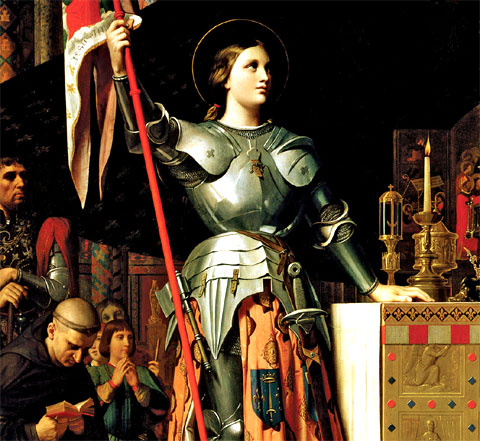
Jeanne d'Arc
The maiden of Orleans, as she was called, French saint and heroine. Born into a well-to-do peasant family, Joan of Arc's childhood took place during the bloody conflict of the Hundred Years' War, and at the age of 17 she led the French army. In 1430 she was captured by the British and, accused of heresy and witchcraft she was burned alive at the stake.

Flora Tristán
Born in Paris on April 7,1803, she was a writer, socialist thinker and French feminist of Peruvian descent. One of the great founders of modern feminism, she wrote "Emancipation of Women", which was published two years after her death, and "The Worker Union" which lays the foundations of feminism and highlights the rights of workers, especially females.


Emmeline Pankhurst
Born in 1858, she was the most important leader of the English suffragettes, founded the Women's Social and Political Union or WSPU, a women's movement for the right to vote, a struggle that took her to prison more than once. The WSPU obtained such a right in 1928 for all women after reaching the age of majority at 21.


Marie Curie
A Polish scientist born in 1867, she was the first person to receive two Nobel Prizes in different specialties, Physics and Chemistry, and the first woman to hold the position of professor at the University of Paris. In 1989, after years of hard work and in precarious conditions, together with her husband (who left his own research to help her), they announced the discovery of two new elements: polonium and radio. In 1995 she was buried with honours in the Pantheon of Paris on her own merits.


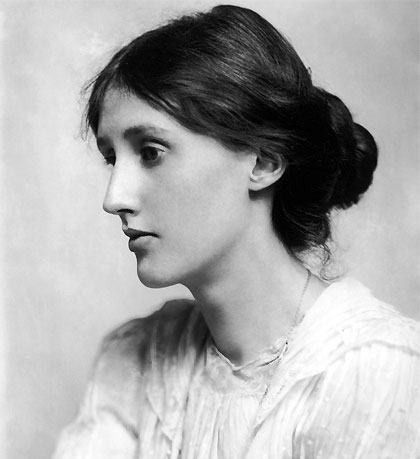
Virginia Woolf
He was born in London in 1882. Novelist, essayist, letter writer, journalist, editor and British storyteller she is considered one of the most outstanding figures of 20th century literature modernity. Woolf was one of the first to reflect on female identity and its relationship with the arts. His long essay "Una habitación propio", with his famous sentence "A woman must have money and a room of her own if she is going to write fiction", was rediscovered during the 1970s as one of the most cited texts of the feminist movement, which exposes women's difficulties in consecrating themselves to writing in a male-dominated world.

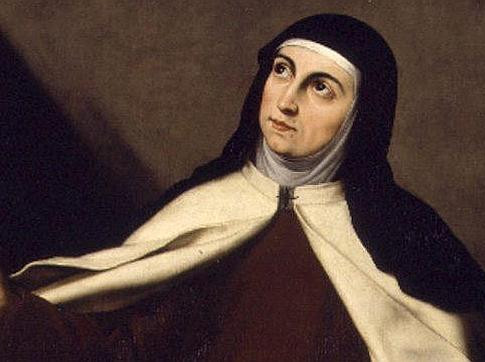
Santa Teresa de Jesús
In the 16th century, the founder of the barefoot Carmelites dispatched herself in various books against the inequality she observed in the decisions taken by men who held power at that time. The world has us cornered',' although women are not good for advice, sometimes we get it right' or' it is not a time to throw away strong spirits, even if they are women' are some of the statements that this nun, a doctor of the Catholic Church, left written at a time when women were practically invisible in society.

Sor Juana Inés de la cruz
Born in San Miguel Nepantla, Mexico in 1648, she is considered the first feminist of the "New World" and the most important writer of the twentieth century in Mexico. She entered the convent because the university was exclusively for men and defended until his last days the parity of the sexes, this can be clearly seen in his works "Redondillas" and in "Hombres incios". The letter "Reply to Sor Filotea de la Cruz" is a clear manifestation of the rights of education for women, as well as the possibility of being a woman and also intellectual or scholarly.


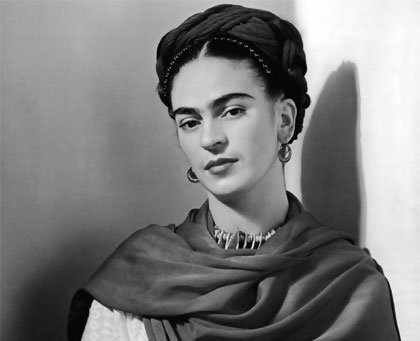
Frida Khalo
Born in 1907 in Coyoacán, Mexico, she was a well-known Mexican artist who, since she was a child, had to suffer severe fibromyalgia pains along with other traumas due to an accident she had at the age of 18 when she was run over by a tram that broke her spine in three parts, a condition that led her to lie prostrate in bed for a long time. However, she did not stop expressing herself through painting, revealing this physical and emotional pain for the unfulfilled desire to be a mother. Because of her condition she was unable to carry out her pregnancies and this led her to produce some of her most famous works, such as' Henry Ford Hospital' or' Frida and abortion'.

Indira Gandhi
She was born in 1917 in India and was the first woman to hold the office of Prime Minister of India. Her surname was taken from her husband, Feroze Gandhi, a politician and journalist who was not related to the pacifist Mahatma Gandhi. She was educated in Switzerland and England and had a great capacity in oratory. In 1938 she joined the Congress Party and for the next few years she actively participated in the struggle for independence, in which she collaborated with Gandhi. In 1966 she made History by being elected by the Indian Parliament as the new prime minister. In May 1984, she was betrayed by two members of her security guard.


Eva Perón
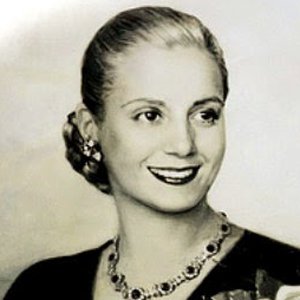
María Eva Duarte de Perón, better known as Eva Perón or Evita, born May 17,1919, was an Argentine political leader and actress. Married to Juan Domingo Perón in 1945 and after taking office as president of the Argentine Nation, she became first lady. She was president of the Partido Peronista Femenino, president of the Eva Perón Foundation and was officially declared "Chief Spiritual Officer of the Nation" in 1952. Evita was a charismatic woman with a great talent for oratory and convocation. Of very poor origin, she took advantage of her position as first lady to fight for the rights of workers and women, with special emphasis on women's suffrage.

Rigoberta Menchú
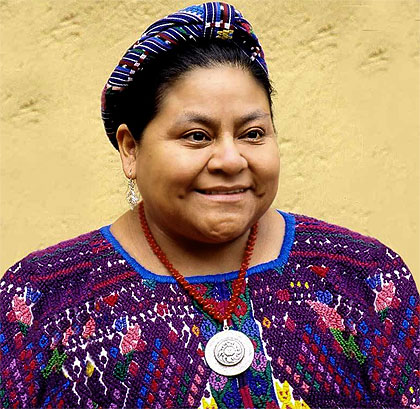
Born in Guatemala in 1959, she is a Guatemalan indigenous leader, member of the Mayan Quiché group, human rights defender, UNESCO Goodwill Ambassador and Nobel Peace Prize winner. She's been a human rights activist. From the beginning of his life she had to deal with poverty, discrimination and repression of the Guatemalan ruling classes. She suffered the death of her mother and several family members who were killed by the' death squads'. She went into exile in Mexico to escape repression and published an autobiography in 1983, which was heard by the United Nations. One of his greatest contributions was to denounce the situation of indigenous women in Latin America.

Malala Yousafzai
Born in Pakistan on 12 July 1997, she is a Pakistani student, activist and blogger. She is considered the youngest Nobel Peace Prize winner since the prize was awarded to the 17-year-old in 2014. Malala is known for her activism for civil rights, especially women's rights in the north-western part of Pakistan, where the Taliban regime had banned girls from attending school. On 9 October 2012 in Mingora, Malala Yousafzai received a bullet in the head for defending this cause, the right to education of hundreds of girls. She almost died in the attack, but fortunately he was able to recover.


Commenti